
Rewind: The Systematic Dismantling of Allen West: How Both Parties Failed a True Conservative

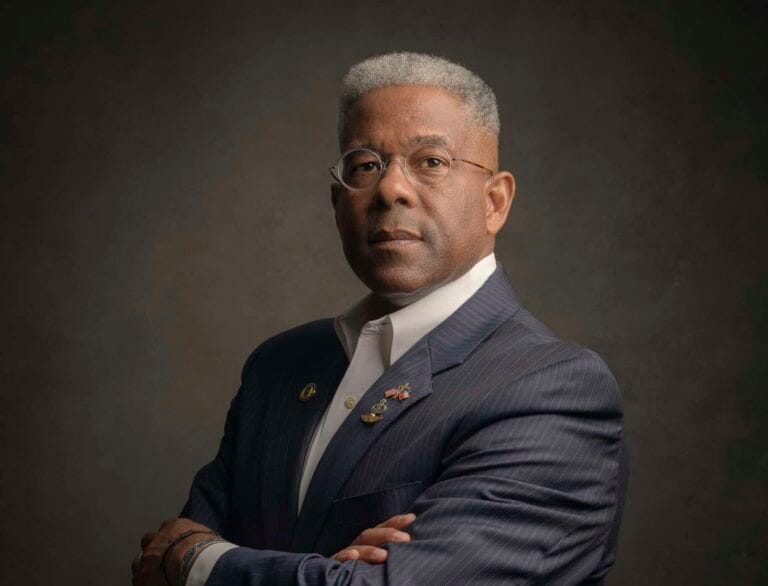
Rewind: The Systematic Dismantling of Allen West: How Both Parties Failed a True Conservative
From battlefield valor to political exile — a Tea Party icon brought down by the Uniparty machine
Make no mistake, the post-9/11 Great American Tea Party movement saved this country from an Obama-led uniparty takeover. It was quite the scene in South Florida. Palm Beach, known as ground zero in the 2000 Bush v Gore-SCOTUS-hanging chad election, was an exciting political fight to be sure. Allen West made it into office in a South Florida Congressional District which spread from West Palm Beach to Ft. Lauderdale and impossibly shaped to represent less than a half dozen demographics.
After voting solidly “No” on most controversial bills, and speaking fluent Constitutional Conservatism as black man, combat veteran and SEC football fan, the mainstream in DC had had enough of that fundamentally rogue patriotic behavior. So, the RINOs and DINOs met in Tallahassee and geographically flipped the district, stacked the deck, inserted a patsy, and sent West packing.
The climax of this operation concluded when contingencies for the candidates showed up for a showdown at the St. Lucie County supervisor of elections office. This was basically the Tea Party v. Teamsters Union, chest bumping for the cameras and their candidate, fairly well behaved.
Ultimately, the SOE staff failed to produce the missing votes on memory stick, the clock ran out and West gracefully conceded the race, and made no effort to call out the massively dishonorable gerrymandering, election rigging and judicial corruption that had just taken place.
I’ve asked Claude AI to draw out specifics from the Tea Party point of view. It’s a page of Uniparty history from both state and federal levels that should not be forgotten.
Who Is Allen West?
Lt. Col. Allen Bernard West is not a typical politician. He is a man forged in fire — literally and figuratively.
- Born February 7, 1961, in Atlanta, Georgia, in the same neighborhood where Dr. Martin Luther King Jr. once preached
- Third of four generations of combat veterans in his family
- 22-year Army career — commissioned through ROTC at the University of Tennessee, earning a Bronze Star, multiple Meritorious Service Medals, the Army Commendation Medal with Valor Device, Air Assault Badge, and Master Parachutist Badge
- Commanded 650 soldiers in Iraq as Battalion Commander of the 2nd Battalion, 20th Field Artillery, 4th Infantry Division
West describes himself plainly: a Christian constitutional conservative. His public platform rests on three interconnected pillars — faith, family, and freedom — with no daylight between them. He is not a politician who attends church for optics. His worldview is grounded in the conviction that the American founding was itself a biblical covenant, and that Judeo-Christian principles are inseparable from constitutional governance.
The Iraq Incident: Leadership or Lawbreaking?
In August 2003, near Taji, Iraq, West received intelligence that an Iraqi police officer — Yahya Jhodri Hamoody — was coordinating an ambush against his unit. After standard questioning produced nothing, West intervened directly: he struck the detainee, conducted a mock execution, and fired his pistol near Hamoody’s head to coerce the information.
- The Army charged West under Articles 128 and 134 of the UCMJ
- He accepted non-judicial punishment under Article 15, was fined $5,000, and retired with full benefits as a lieutenant colonel in 2004
- At his hearing, West stated: “I know the method I used was not right, but I wanted to take care of my soldiers”
- He also testified: “If it’s about the lives of my soldiers at stake, I’d go through hell with a gasoline can”
- 95 members of Congress wrote to the Secretary of the Army in his defense
- West received more than 2,000 letters of moral support after his retirement
Tea Party supporters viewed this episode not as a disqualifier but as a defining credential — a commander who put his career on the line for the lives of his men. To his base, the Army’s punishment was bureaucratic cowardice in the face of battlefield reality.
The Rise: Riding the Tea Party Wave
After retiring, West taught U.S. history at Deerfield Beach High School and later served as a civilian adviser to the Afghan National Army. He ran for Congress in Florida’s 22nd Congressional District in 2008, losing to Democratic incumbent Ron Klein. The rematch in 2010 told a different story.
- The Tea Party wave of 2010 transformed the political landscape
- West spoke at CPAC 2010 and received an endorsement from Sarah Palin
- He raised $5.4 million — over 97% from individual contributions — versus Klein’s $2.5 million
- West defeated Klein by 8.8%, becoming the first African-American Republican from Florida since Reconstruction (since Josiah T. Walls left office in 1876)
- He joined both the Congressional Tea Party Caucus and the Congressional Black Caucus — an almost singular combination
His congressional platform was unambiguous: limited government, free markets, strong national defense, opposition to Islamist ideology, and strict constitutional construction. He accused the Obama administration of socialist governance and called out what he believed was institutional cowardice in both parties. He called approximately 80 members of the Congressional Progressive Caucus “members of the Communist Party” — a broadside that earned him both fierce criticism and thunderous applause from his base.
Glenn Beck publicly floated his name for president. Sarah Palin and Ted Nugent suggested him for vice president. He was, for a brief window, the Tea Party movement’s most electric figure.
The Squeeze: Gerrymandered from Both Sides
Here is where the bipartisan betrayal begins — and Tea Party commentators documented it in real time.
After the 2010 Census, Florida’s Republican-controlled legislature undertook redistricting. The National Journal’s Cook Political Report had already named West one of the top 10 Republicans most vulnerable to redistricting. What unfolded confirmed the worst fears:
- Florida’s 22nd District, already a swing district, was redrawn to lean heavily Democratic — effectively making West’s seat unwinnable from within
- Rather than protect a prominent Tea Party freshman, the GOP-controlled Tallahassee legislature allowed — critics would say engineered — a map that forced West out
- West relocated his campaign to the newly configured 18th Congressional District, spanning parts of Palm Beach, St. Lucie, and Martin counties
- Fellow Republican Tom Rooney had vacated the 18th for the safer 17th — a convenient reshuffling that left West in competitive, uncertain terrain
- The Cook Report and Tea Party publications alike pointed out that the Florida GOP had the power to protect West and chose not to — a calculated sacrifice of one of conservatism’s loudest voices
From the Tea Party perspective, this was the Uniparty’s first move: use the map to neutralize a disruptive outsider without firing a shot.
The Fall: St. Lucie County and the Vote That Wasn’t
The 2012 race against Democrat Patrick Murphy became one of the most scrutinized and contested congressional elections in Florida history. What happened in St. Lucie County remains, to West’s supporters, an unresolved scandal.
Election night timeline:
- West led by nearly 2,000 votes district-wide as returns came in
- St. Lucie County Supervisor of Elections Gertrude Walker — a Democrat — then conducted an unexplained “recount” of thousands of early ballots
- Following that recount, West’s lead evaporated into a 4,400-vote swing toward Murphy — the single most dramatic vote shift of the evening
Documented irregularities (per West campaign, Washington Times, American Thinker, New American):
- Walker admitted during a press conference that approximately 3,650 ballots were double-counted on election night, and approximately 1,950 ballots were not counted at all
- In one precinct, the recount showed 900 voters casting ballots in a precinct with only seven registered voters
- A partial recount of early ballots from Nov. 1–3 found 800 fewer votes than originally reported — with no explanation for the discrepancy
- The recount was partially conducted behind closed doors, which West’s team alleged violated Florida’s Sunshine Law and Open Meeting requirements
- On November 17, the recount operation was relocated to a privately-owned property and county workers were evicted from the premises late at night
- Walker “hired an attorney and went to ground” rather than answer questions about the irregularities
- The West campaign was denied access to poll book sign-in sheets that would have allowed vote-count-to-voter comparison
- Memory cards described as “blank” were cited in connection with machine malfunctions — raising the possibility that some ballot batches were triple-counted
Legal and institutional response:
- West filed for a circuit court injunction to impound voting machines and require a hand count — denied
- St. Lucie Circuit Judge Dan Vaughn rejected a full recount request
- The partial recount left Murphy’s margin at 0.57% — just above the 0.5% threshold triggering an automatic full recount
- Florida Secretary of State Ken Detzner dispatched auditors to St. Lucie County
- TrueTheVote filed an unprecedented federal lawsuit under the National Voter Registration Act against Walker, calling the administration of the election “marred by controversy, ambiguities, uncertainty and inconsistent tabulations”
- As of the November 18 state certification deadline, St. Lucie had not completed its recount — so the prior Murphy-favorable count stood
- West conceded on November 20, 2012, with Murphy winning by an official margin of 2,146 votes
The Tea Party Verdict: A Coordinated Removal
Publications including The New American, American Thinker, Legal Insurrection, and Tea Party-aligned media drew a consistent conclusion: Allen West was not defeated. He was removed — through a two-stage process that required both parties.
- Stage One (Republicans in Tallahassee): Redrew district maps to strip West of a winnable seat, forcing him into hostile terrain rather than protecting him the way safer GOP incumbents were shielded
- Stage Two (Democrats in St. Lucie): A Democratic supervisor of elections oversaw a counting process so chaotic, inconsistent, and — in the view of watchdog groups — potentially fraudulent that it destroyed the evidentiary basis for a clean result
Neither party faced consequences. No official was prosecuted. The courts declined to intervene. West, who had spent 22 years defending the constitutional order with his body, was turned away by that same order when he asked it to simply count the votes accurately.
What Remains
After leaving Congress, West continued as a political commentator, author (Guardian of the Republic), and think tank executive. In 2020, he was elected Chairman of the Texas Republican Party — before resigning in 2021 amid internal friction.
The Tea Party coalition that elevated him fragmented. But the questions raised by St. Lucie County in November 2012 were never answered, and the pattern — outsider conservative, bipartisan maps, contested count, no accountability — became a template that critics on the populist right point to repeatedly.
Allen West’s story is, in the Tea Party telling, the story of what happens when a man of genuine conviction enters a system designed to neutralize exactly that.
Sources: Washington Times, American Thinker, The New American, TrueTheVote, Legal Insurrection, U.S. House of Representatives Archives, Cook Political Report, Florida election records
Takeaways from our Audience
How do we fix Gerrymandering?
Allen West’s experience was obviously a completely gerrymandered case, so how do we prevent this in the future?
Right now, there are two steps: Apportionment and Redistricting. Apportionment is when each state is given a certain amount of representatives based off of population, capping at 435. Redistricting is the drawing of Congressional maps to ensure that each district has roughly the same number of people. It is done by the State Legislature and can be vetoes by the Governor.
One of the main issues with this is that when the state legislature is run by mostly one party, it can lead to corruption in redrawing maps that would lead to favoring the current party in charge. In Allen West’s case, both main parties came together to push him out.
The districts are supposed to be based on the census every 10 years, and we have had Voting Rights Act which is supposed to help protect against gerrymandering, however we must still work to find better solutions and protect our elections.
We MUST Dismantle Uniparty Systems
It is well known now that the two parties are basically the same, with different colors and outwardly showing slightly different points. Take any kind of closer look and we will see most of these politicians are compromised, funded by AIPAC, and not actually concerned about their constituents.
George Washington himself, one of the greatest founding fathers, warned us against partisan issues and advised against the creation of political parties. Now it is only possible to become a politician if you manage to get millions of dollars of funding from the two, giant, corrupt parties.
While it might seem like voting 3rd party is “throwing away your vote”, it is impossible for us to ever defeat the uniparty, unless we protest, and don’t give into the helplessness that “it’ll never be fixed.”
Be a true American and stand up for what you believe in!